RTA Inspection Checklist Dubai: What Inspectors Look For

Quick Answer: What Do RTA Inspectors Check in Dubai?
The RTA vehicle inspection in Dubai covers eight main areas: exterior condition and lights, tyres and wheels, brakes, steering and suspension, engine and emissions, interior safety systems, underbody and chassis, and headlight alignment. Every one of these areas must meet the Roads and Transport Authority's minimum standards before your vehicle registration can be renewed.
Why Knowing the RTA Checklist Matters
Most car owners in Dubai only think about their RTA inspection when the renewal reminder arrives. By that point, some of them find out the hard way that a single overlooked item can mean a failed test, an additional fee, and another trip back to the testing center. The RTA inspection checklist is not a mystery. The Roads and Transport Authority publishes its standards, and the inspectors follow a structured process every single time. Over 20 years of handling RTA passing for car owners across Dubai, the team at ABBA Auto Center has seen the same failure points come up again and again.
1. Exterior Body and Glass
The inspection begins before your car even enters the bay, with a visual walk-around of the entire vehicle. The windshield must be free from cracks, chips, or any damage that falls within the driver's field of vision. All exterior mirrors must be intact, properly mounted, and adjustable. The number plates must be clean, legible, and properly mounted. The vehicle body should not have any damage that affects its structural integrity. Windshield chips from highway driving are extremely common and are the number one exterior reason vehicles fail.
2. Lights and Indicators
Every single light on the vehicle is tested during the inspection, and a single blown bulb is enough to fail the entire test. Headlights on low and high beam, taillights, brake lights, reverse lights, front and rear indicators on both sides, hazard lights, the number plate light, and fog lights if fitted are all checked. The brightness and color of each light must conform to standards, and headlight alignment is measured using a calibration machine. To self-check, do this at night on a flat surface and turn on every light function one by one while walking around the car.
3. Tyres and Wheels
Dubai's summer heat is one of the most damaging environments for tyres in the world, with road surface temperatures regularly exceeding 45°C. Tread depth is measured across all four tyres, with a minimum legal depth of 1.6mm. Tyre sidewalls are inspected for cuts, bulges, cracks, or bubbling. Tyre age is increasingly being considered, and the four-digit code on the sidewall shows the week and year of manufacture. All four tyres must be the same size and type as specified for the vehicle, and wheel condition is checked at the same time.
4. Brakes
The brake test is conducted using a roller brake tester, which measures the actual braking force produced by each wheel. The vehicle is driven onto a set of motorized rollers and each axle is tested separately. The results must meet minimum force thresholds and the front wheels must produce roughly equal force on both sides. The handbrake is tested separately and must hold the vehicle on an incline. Worn brake pads are the most common cause of brake failures. If your car pulls to one side when braking, do not attempt the RTA test until this is diagnosed and fixed. Head to the brake repair service at ABBA Auto Center to get the underlying cause resolved before your test date.
5. Steering and Suspension
Steering play is assessed by turning the steering wheel while the vehicle is stationary. The suspension is inspected for worn or damaged components, including shock absorbers, struts, control arms, ball joints, tie rod ends, sway bar links, and bushings. The inspector pushes and pulls on each corner of the vehicle to feel for unusual movement. Speed bumps and poorly surfaced roads in some areas of Dubai are harder on suspension components than smooth highways, so if your car makes a clunking or squeaking noise over bumps, get the suspension checked before your test.
6. Engine and Emissions
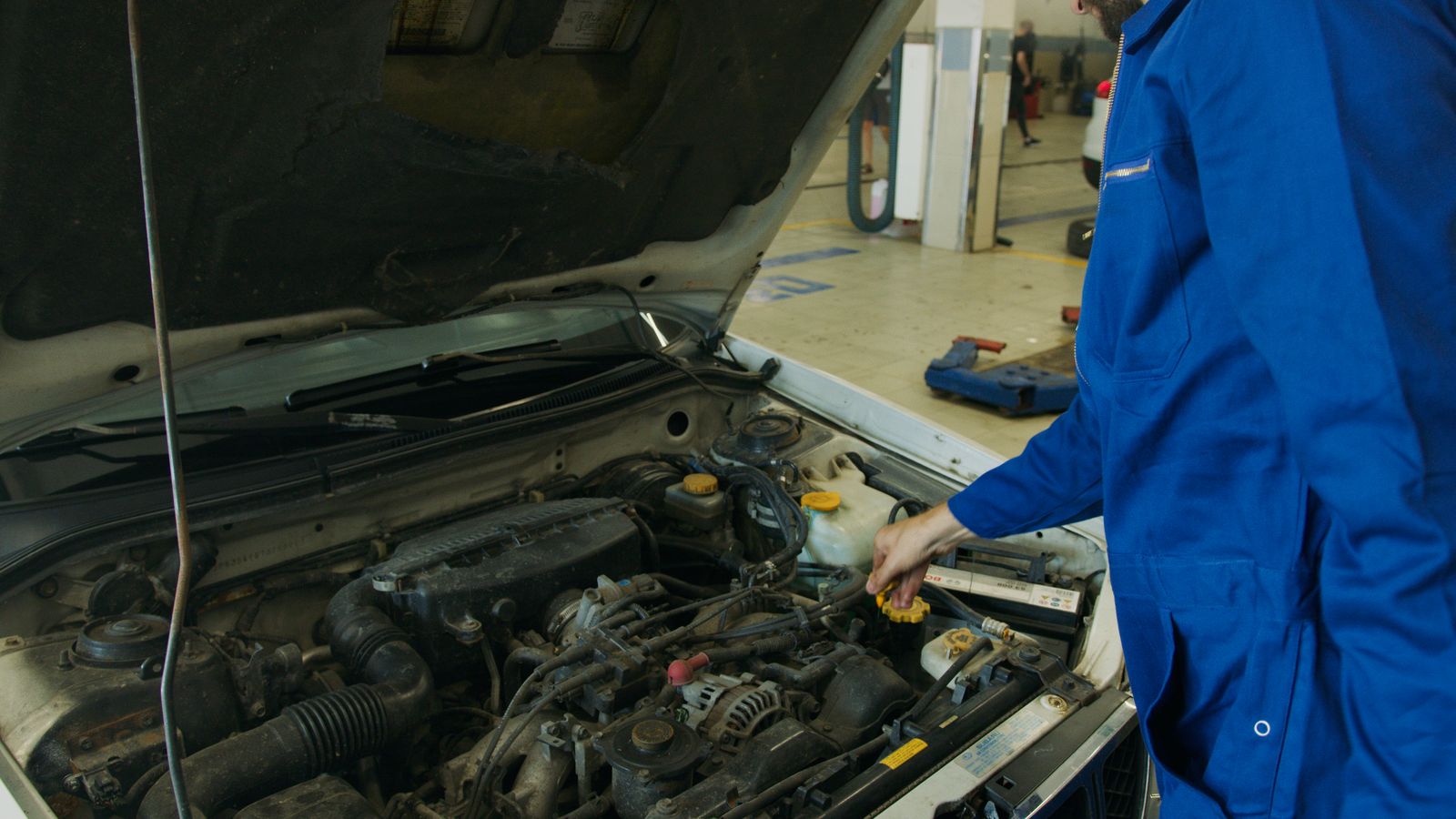
A probe is inserted into the exhaust tailpipe to measure hydrocarbon and carbon monoxide levels, both of which must fall within the limits for your vehicle. For petrol engines, high hydrocarbon levels usually indicate incomplete combustion. For diesel engines, visible black smoke is an immediate red flag. The check engine light is treated as a separate but related issue, because if the malfunction indicator lamp is illuminated when your engine is running, this is a direct failure regardless of whether the underlying fault affects emissions. A full car scanning diagnostics session will read all fault codes and allow your technician to fix whatever is causing the warning light. The inspector also looks at the engine bay for visible leaks and verifies the VIN against the registration card.
7. Interior Safety Systems
All seatbelts are tested individually, and each must extend and retract smoothly with a buckle that clicks and releases cleanly. The horn must produce a clear, audible sound. Dashboard warning lights are checked with the engine running, and any warning light that remains on is noted. For vehicles fitted with airbags, the SRS light must not be on, and if it is, the electrical system repair team can run a full SRS diagnostic. Windshield wipers are tested, and the speedometer is checked to ensure it is functioning.
8. Underbody and Chassis
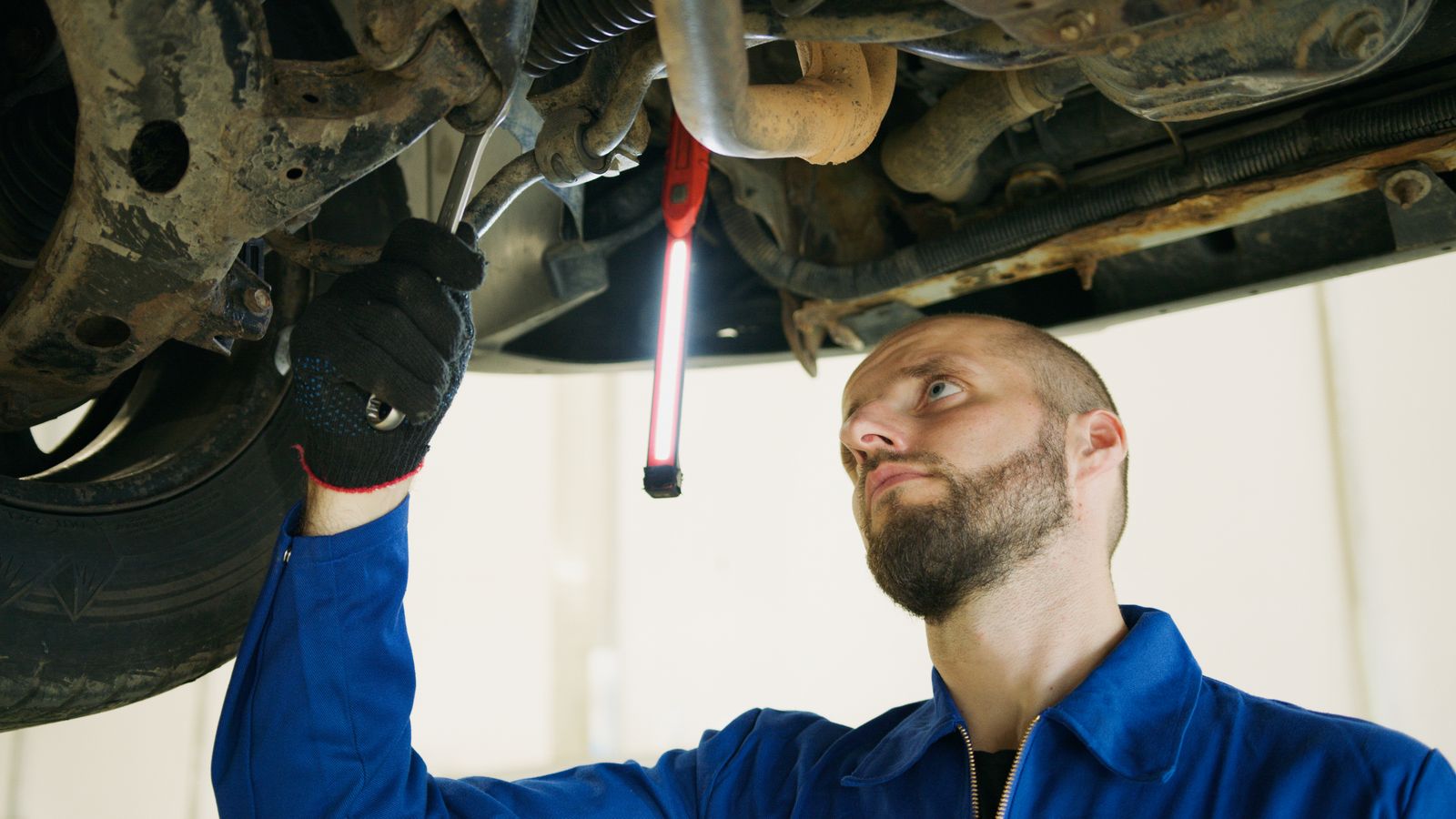
The underbody inspection is carried out with the vehicle raised on a hydraulic lift or positioned over a pit. The entire exhaust system is inspected for holes, cracks, missing sections, loose mounts, and corrosion. Fuel lines are inspected for leaks, cracks, and correct routing. The chassis and frame are checked for structural damage, cracks, or corrosion. The brake lines and hydraulic hoses are checked for leaks, kinks, or damage, and torn steering rack gaiters are noted.
What Happens During the Inspection: A Summary Timeline
You arrive at the testing center, submit your documents at the counter, and receive a queue number. When your number is called, you pull your vehicle into the inspection bay. The inspector conducts the visual walk-around, checks your lights, and examines the exterior. You then drive the vehicle onto the roller brake tester. The emissions probe is inserted, headlight alignment is measured, and the vehicle is raised for the underbody check. Finally, the interior safety items are verified, and you receive your printed pass or fail certificate. The inspection itself typically takes 30 to 45 minutes, and booking a time slot through the RTA app reduces wait time significantly.
How to Use This Checklist Before Your Test
Start with the lights at night, turning on every light function and confirming each works. Check your tyres in daylight, using a coin or gauge to check the depth and looking at the sidewalls for any bubbling, cracking, or cuts. Sit in the driver's seat with the engine running and look at the dashboard, where every warning light should be off. Test your horn, test your wipers, and try each seatbelt. Listen for any unusual sounds when you drive. If you find anything during this self-check, the pre-RTA inspection check at ABBA Auto Center covers every single point on the official checklist, and the center is located inside the AG CARS Vehicle Testing Centre so the pre-inspection and the official test can happen on the same day.
The Most Common RTA Inspection Failures in Dubai
Blown indicator or brake light bulbs are at the top of the list. Worn brake pads and discs follow closely, especially on vehicles used primarily in city traffic. Tyre damage and insufficient tread depth are a constant issue given Dubai's road surface temperatures. Dashboard warning lights, particularly check engine and ABS, catch many owners off guard. Cracked windshields cause numerous failures, especially after the summer. An oil change, a brake service, new tyres, or a diagnostics scan are all quick fixes that ABBA Auto Center's car service team can complete on the same day.
RTA Inspection Checklist for Specific Vehicle Types
Diesel vehicles face stricter emissions requirements regarding visible smoke and particulate output. Older vehicles tend to have more wear on suspension components, brake hardware, and emission control systems, so a thorough pre-inspection is especially valuable. Modified vehicles face additional scrutiny, with window tint that exceeds the permitted 50% visible light transmission level being a very common cause of failure. Electric vehicles such as Tesla, BYD, and Lucid skip the emissions test stage but are subject to all other checks. SUVs with a lift kit receive additional scrutiny, so ensure any lift is within the RTA's permitted limits and that wheel alignment has been properly set.
Conclusion
The checklist above covers every single area that inspectors assess, and every single item on it is something you can verify or fix before your test date. The most efficient approach for Dubai car owners is to book a pre-RTA inspection at a reliable garage, have everything checked in one visit, fix any issues that come up, and then proceed to the official test with confidence. ABBA Auto Center has been handling RTA preparation for car owners across Dubai for over 20 years, available seven days a week, with an RTA passing assistance service that means the team can manage the entire queue and test process on your behalf.
Frequently Asked Questions
What is the most common reason for failing the RTA test in Dubai?+
Worn brake pads and blown indicator or brake light bulbs are consistently the most common failure reasons. Both are quick and inexpensive to fix before the test.
Does the RTA check the air conditioning in Dubai?+
The AC system is not directly part of the RTA inspection checklist. However, if your AC failure has triggered a dashboard warning light, that warning light will cause a failure. For AC-related issues, the AC service and repair team can diagnose and fix the issue before the test.
Can a cracked windshield outside the driver's line of sight still fail the test?+
Inspectors assess each case individually. A crack at the extreme edge of the windshield may not trigger a failure, but any crack that extends into the main field of vision in front of the driver is a definite failure. Getting any windshield crack repaired before the test is the safest approach.
What is checked under the bonnet during the RTA inspection?+
The inspector looks at the engine bay for visible leaks, verifies the VIN number against your registration card, and checks that the engine management light is not on. They do not perform a full mechanical inspection of engine components, but visible issues are noted.
Need Professional Assistance?
Our experts at ABBA Auto Center are here to help with any of your automotive needs.
Book Your Service via WhatsApp